Tag: apple

  • Apple: iPhone, iPad, Mac are better products for most users

    The reason I love my iPhone isn’t because it’s made by Apple, it’s simply because I think it’s the best mobile device ever made. And that’s where I’m going with all this — just hang in there, I know there’s probably some cute kitten with overlaid capitalized text on Facebook you’re thinking about checking out. The reason I compare every device to an iPhone is not because it’s an Apple product, it’s because Apple has done something that no other manufacturer in the world has done. Apple has created a product that isn’t a product. It’s a seamless, effortless, enjoyable extension of your computer and your life. In fact, you could now argue that a computer is just an extension of your phone, and you’d be right.

    via Apple: iPhone, iPad, Mac are better products for most users.

  • The iPhone 5

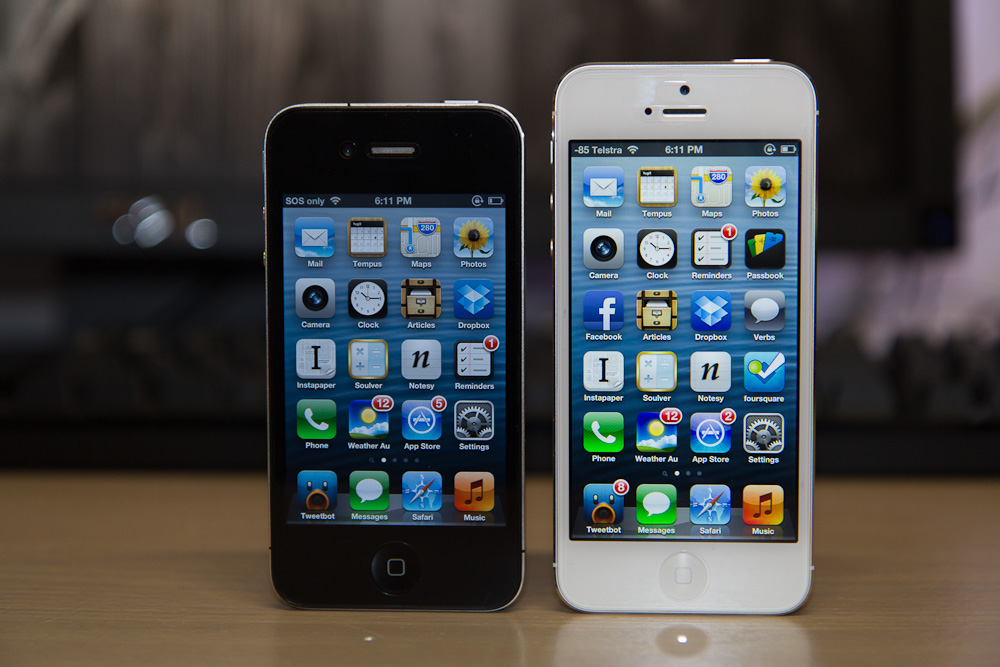
    A few weeks before the iPhone 5 was even announced, before all the rumours, part leaks, before all of that, I wondered what I was going to do with my old iPhone 4.

    See, I’m on the “good” iPhone cycle: my first iPhone was the 3G, then the 4, and now, the 5. I skipped the first iPhone due to it not being available in Australia, skipped the 3GS due to still being on a contract, and skipped the 4S for the same reason.

    For many, this two-year contract cycle is nothing new, the natural progression of things if you’re not a compulsive upgrader, and/or don’t have the funds to buy a new iPhone every year.

    In any case, as I pondered what I was going to do with my old iPhone, it dawned on me: why not sell it off and use another phone I had lying around? As I dwelled on this, it began to make more and more sense; by selling the two-year-old iPhone 4 off, I’d get a few dollars more than I would have if I sold it off after the release of the iPhone 5.

    Question my committal if you want, but as a test, I pulled out my trusty old Nexus S to see how I’d fare using Android for a few weeks. Jelly Bean had just just been released, you see, and now was as good a time as any to test the latest and greatest Android release, on hardware around the same age as my iPhone 4.

    This was my first mistake.

    It’s not that I hate Android. Really, it’s not. It’s just that, for me personally, Android doesn’t quite gel as much as iOS does. Things are less fluid. Third party app quality just isn’t there.

    But like any curious and “bored with iOS” technology enthusiast, I forged on.

    This was my second mistake. For two weeks, it was nothing but constant grating. Me constantly fighting the OS on what I wanted to do versus what it allowed me to do. I’d imagine my experiences with Android during the few weeks of pain would have been an approximation of an abusive relationship of some kind.

    Sure, it was stable enough. I only saw a few crashes here and there, mostly from apps labelled as beta in the Play Store. Sure, there were apps available for all the popular things I used on iOS: Twitter, Instagram, Instapaper, and even a Dropbox-syncing, Markdown-supporting, plain text editor.
    But the thing is, it’s been a year since I last looked at Android, and I found myself going back to the same apps I used last time around, simply because no better alternatives exist. Actually, that’s not entirely true: there’s now and official Instapaper client for Android. Other than that, the Android app landscape is blacker than black. Where are all the good quality apps?

    Suffice to say, my Android experience, Jelly Bean and all, was pretty bad. Two weeks later (I had originally planned to stick it out for at least a couple of months, until the iPhone 5 was out), I was crawling back to my iPhone 4 and begging it to take me back.

    In some ways, Android reminds me of the desktop Linux experience. It has its advantages, but probably won’t ever reach mass popularity with non-technology-minded people due to inherent issues with the ecosystem and how things work. Unless its locked down and given a stern talking-to, developers won’t be attracted to it anytime soon. And that means it will stagnate.

    But enough about Android and mediocre software experiences combined with stellar hardware specs packaged in the cheapest plastic you’ve ever felt. I’ve since sold off my Nexus S and have acquired the iPhone 5.

    It’s amazing.

    Thinner. Lighter. Faster. All these verbs are true of the iPhone 5, but I still want to talk about three main aspects which make it all worth it. Continue Reading

  • How Google Builds Its Maps—and What It Means for the Future of Everything

    Let’s step back a tiny bit to recall with wonderment the idea that a single company decided to drive cars with custom cameras over every road they could access. Google is up to five million miles driven now. Each drive generates two kinds of really useful data for mapping. One is the actual tracks the cars have taken; these are proof-positive that certain routes can be taken. The other are all the photos. And what’s significant about the photographs in Street View is that Google can run algorithms that extract the traffic signs and can even paste them onto the deep map within their Atlas tool.

    […]

    Google Street View wasn’t built to create maps like this, but the geo team quickly realized that computer vision could get them incredible data for ground truthing their maps. Not to detour too much, but what you see above is just the beginning of how Google is going to use Street View imagery. Think of them as the early web crawlers (remember those?) going out in the world, looking for the words on pages. That’s what Street View is doing. One of its first uses is finding street signs (and addresses) so that Google’s maps can better understand the logic of human transportation systems. But as computer vision and OCR improve, any word that is visible from a road will become a part of Google’s index of the physical world.

    via How Google Builds Its Maps—and What It Means for the Future of Everything – Alexis C. Madrigal – The Atlantic.

    A super-cool read on why Google’s Maps product might be the best thing on the web since Google itself (and why it’ll always be better than whatever Apple can come up with in this regard).

    Google drove cars practically everywhere — on multiple continents, in different countries, states, territories — and took photos while they were doing it. That’s pretty mind-blowing in and of itself, but when you consider they can then use that information to enhance digital maps back in Mountain View?

    Amazing.

  • Why Does Every PC Notebook’s Trackpad Suck? (Or Why Microsoft Is Building its Own Hardware) | PandoDaily

    But when you move away from those machines into computers that are more like appliances, you get the sort of clunkers that now clog the ultrabook market. They’re cheaper than the Air, they have better specs than the Air, and yet—because of things like terrible trackpads—they fall far short of the Air.

    via Why Does Every PC Notebook’s Trackpad Suck? (Or Why Microsoft Is Building its Own Hardware) | PandoDaily.

  • Form vs Function vs Intention

    image design history

    Some people give Apple a hard time about having a similar design language from Braun products from the 60s. The thing is, Apple isn’t simply copying visual cues from the past like Olympus or Pentax. Apple is taking what Dieter Rams has learned from Braun and implementing those philosophies into a modern product with a modern approach. Through this process, Apple is not only producing beautiful products but is also pushing the boundaries of materials, like aluminum and glass. Great artists steal. Stealing isn’t the same as copying. The OM-D’s equivalent in Apple’s world would be the next iMac looking like the first generation Bondi Blue iMac just for nostalgia sake.

    via Coffee Time: Form vs Function vs Intention  – journal – minimally minimal.

    The actual article describes how the new Olympus OM-D pays homage to the humble OM from which it takes many of its design cues, but there’s a nice paragraph about Apple I just had to quote.

  • Portrait of the Google as a great artist

    Apple created and introduced what we now understand to be — and experience as — the modern smartphone.

    It threw out inessential crap like hard buttons and extraneous sliders. It revolutionized battery life in high-power devices. It incorporated technology that understands how you’re holding a device so you don’t have to worry about, for example, switching from portrait to landscape displays. It designed an original yet intuitive interface that even the least tech-savvy person can understand immediately…

    via Kind of a Hater • Portrait of the Google as a great artist.

Benny Ling's Bling

Computers are like a bicycle for our minds.